
The Chromaplane and Haloplane are two different instruments with two different approaches to sound. Here's how to decide which one is right for you.
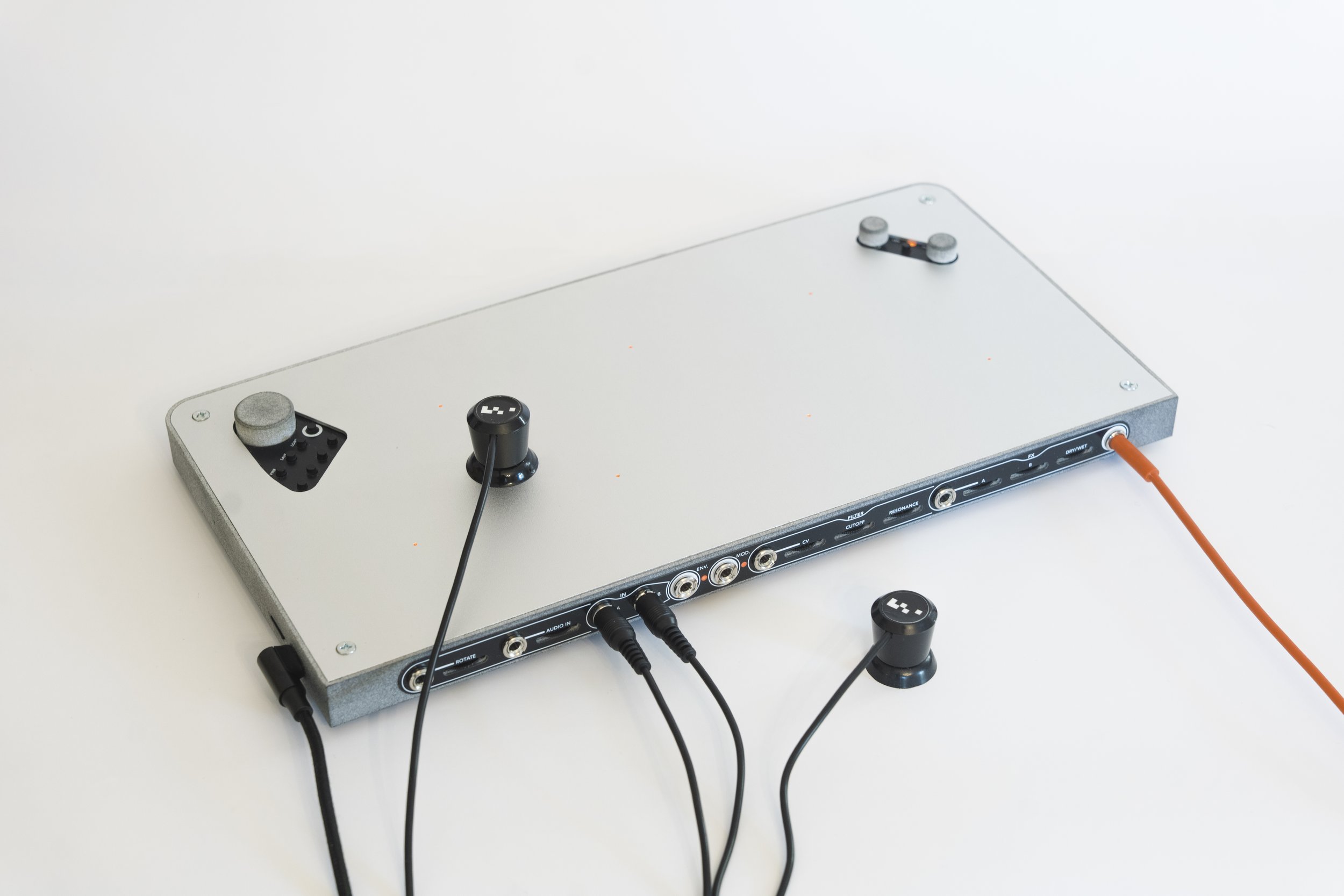
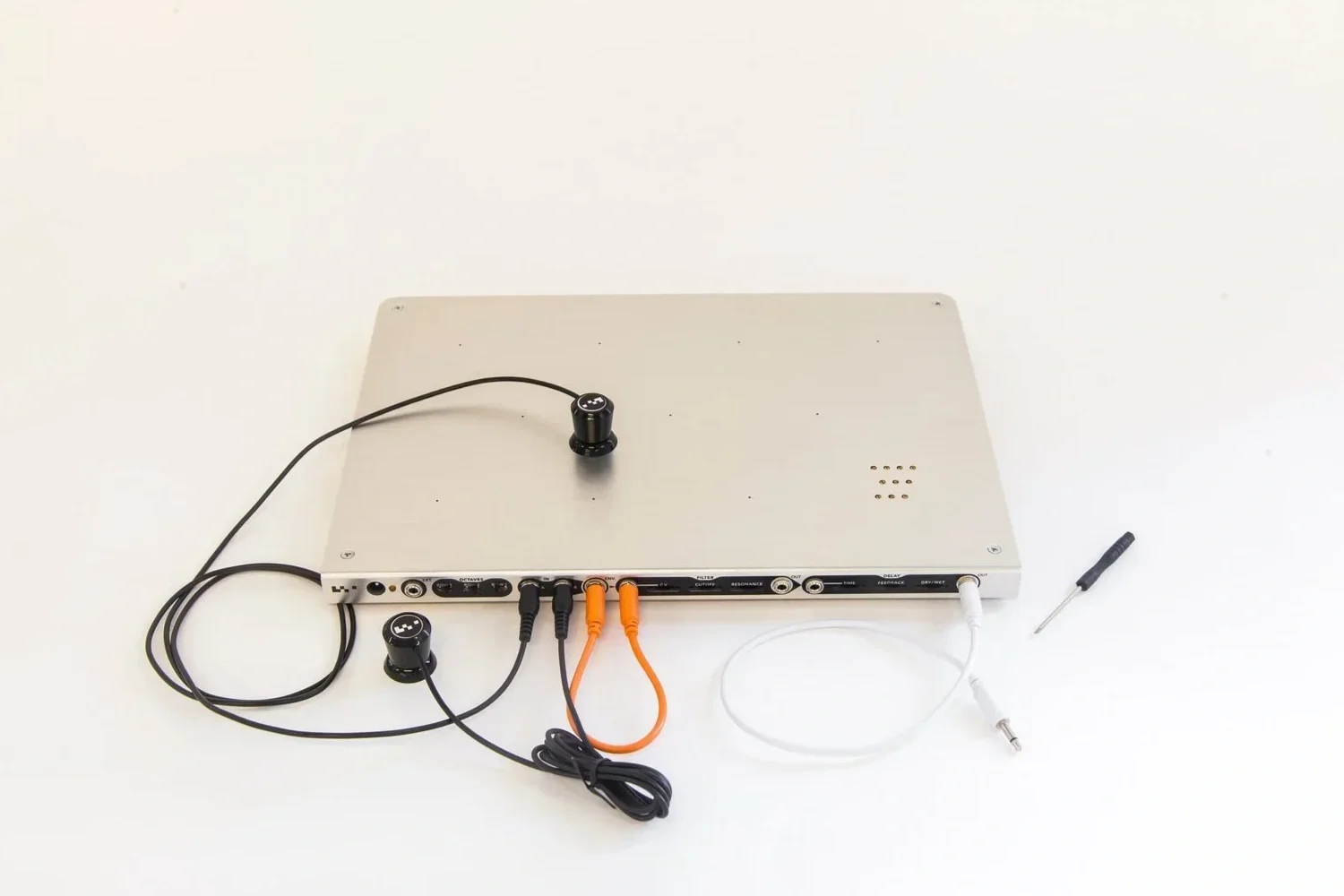
The Chromaplane and Haloplane are two instruments created by Passepartout Duo and KOMA Elektronik. Both are played by moving electromagnetic pickups above a surface, exploring sound through physical gestures rather than a traditional keyboard.
Although they share the same playing technique, they offer different musical experiences. The Chromaplane is an analog instrument built around simplicity and immediacy, while the Haloplane opens up a world of sampling, sound design, and modulation.
Neither is a better version of the other - the choice comes down to how you like to make music, and in which type of set up you envision using the instrument.
| Chromaplane | Haloplane | |
|---|---|---|
| Price | €398 | €648 |
| Electromagnetic Fields | 10 | 7 |
| Sound Generation | Analog oscillators | Sample or waveform loops |
| Tuning | Physical tuning screws | Digital pitch and fine tune |
| Effects | Analog filter and PT2399 delay | Digital filter and choice of five effects |
| Playing Approach | Immediate and accessible | Exploratory and customizable |
| CV In/Outs | CV in for filter and delay | CV in for filter, effect, and rotation |
| Audio Inputs | Single-field audio in | Multi-field audio in and sampling |
| App Integration | Seperate tuning app | Integrated companion app |
| Presets | No internal presets | Save and load presets and scales |
Choose the Chromaplane if you love immediacy and analog character.

The Chromaplane is a fully analog synthesizer with ten independently tunable oscillators. Nothing else about each field can be independently modified.
The instrument’s sound is direct and unmistakably electronic. Its 4-pole analog filter has a special pickup-dependent audio-rate modulation that is raw and characterful. It’s something that doesn’t exist on any other instrument, including the Haloplane. You can also easily patch a feedback loop between filter’s output and the bottom left field. It’s controllable through the pickups, and it’s also magical!
You tune its oscillators using physical adjustment screws, shape the sound with an analog low-pass filter, and add atmosphere with a lo-fi delay. It comes pre-tuned, ready to power-on and play. If you are looking for a distinctive and immediate source of sound to process further with external gear, this instrument is a great option.
The Chromaplane excels at melodies, rich harmonic drones, and subtle interactions between oscillators. Rather than offering endless sound-design possibilities, it invites you to explore what's already there. You can look deeply in it for forms of behavioral instability inherent to its analog nature.
If you are a lover of analog synthesis, physical interaction, and savoring nuance within a focused set of possibilities, the Chromaplane might be for you…
Choose the Haloplane if you want to explore and transform sound.
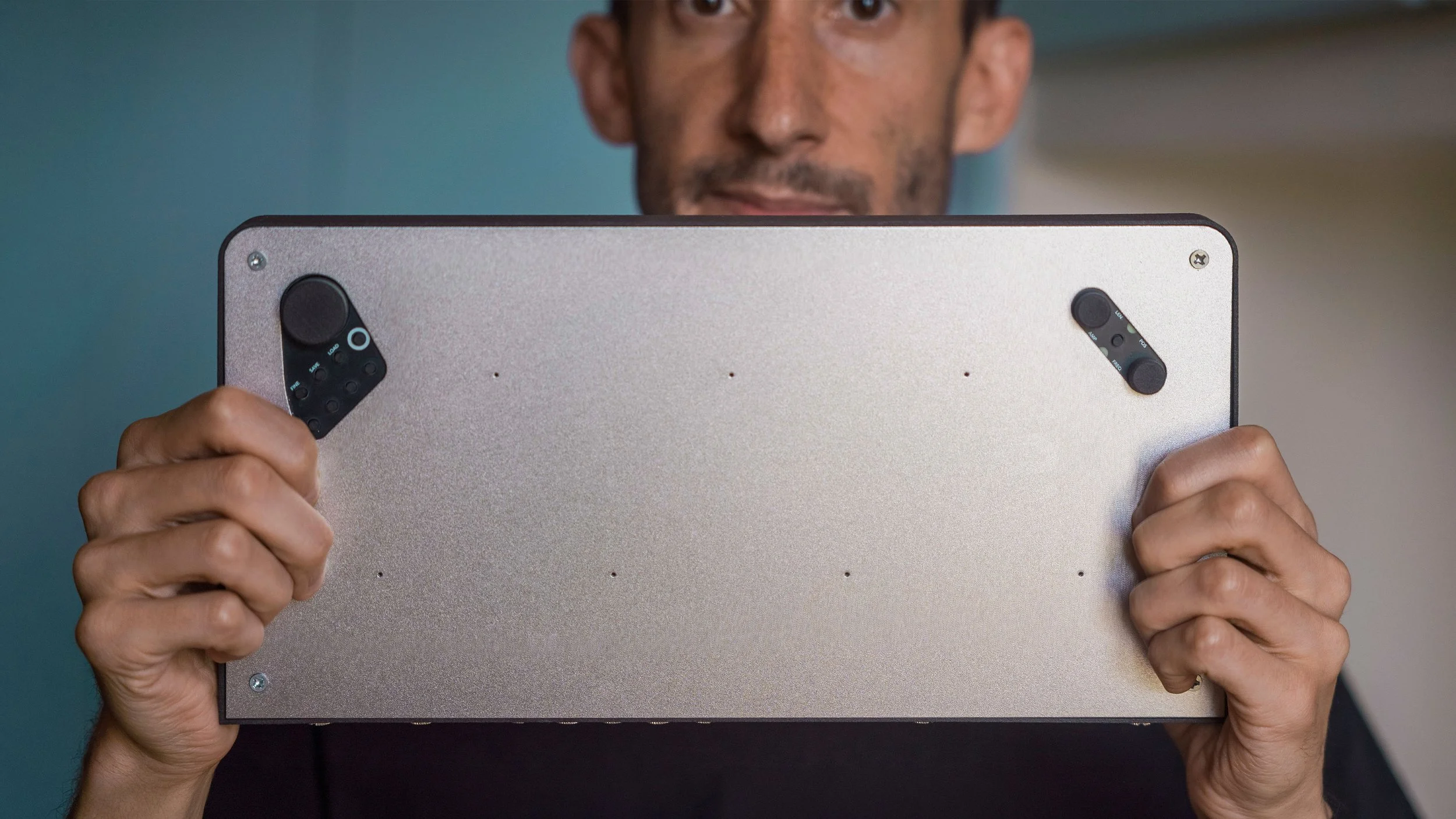
The Haloplane takes the same electromagnetic playing concept as the Chromaplane, and lets you ask: what if?
Instead of ten analog oscillators, it features seven adaptable electromagnetic fields. Each field can play a short looping audio sample or wavetable, allowing you to create sounds ranging from basic oscillations to evolving textures, expanding a single sound into a multiplicity.
You can take advantage of an existing preset library, and exchange presets with other Haloplane users to be inspired.
You can record sounds using its built-in microphone, sample external instruments, or load your own audio files. Each field offers independent control over pitch, loop slices, position, and modulation.
There is a sort of sequencing option too, called Field Rotation, which allows sounds to move around the playing surface, opening up new rhythmic and melodic possibilities too.
The Haloplane also features a multimode digital filter, selection between a few audio effects, preset storage, and a companion web app for managing and exploring your sounds.
And if you play or improvise alongside other musicians, the Haloplane might be more practical to change tunings, for example. If you have no time (or patience) to let an instrument warm up, then you should look at the Haloplane too.
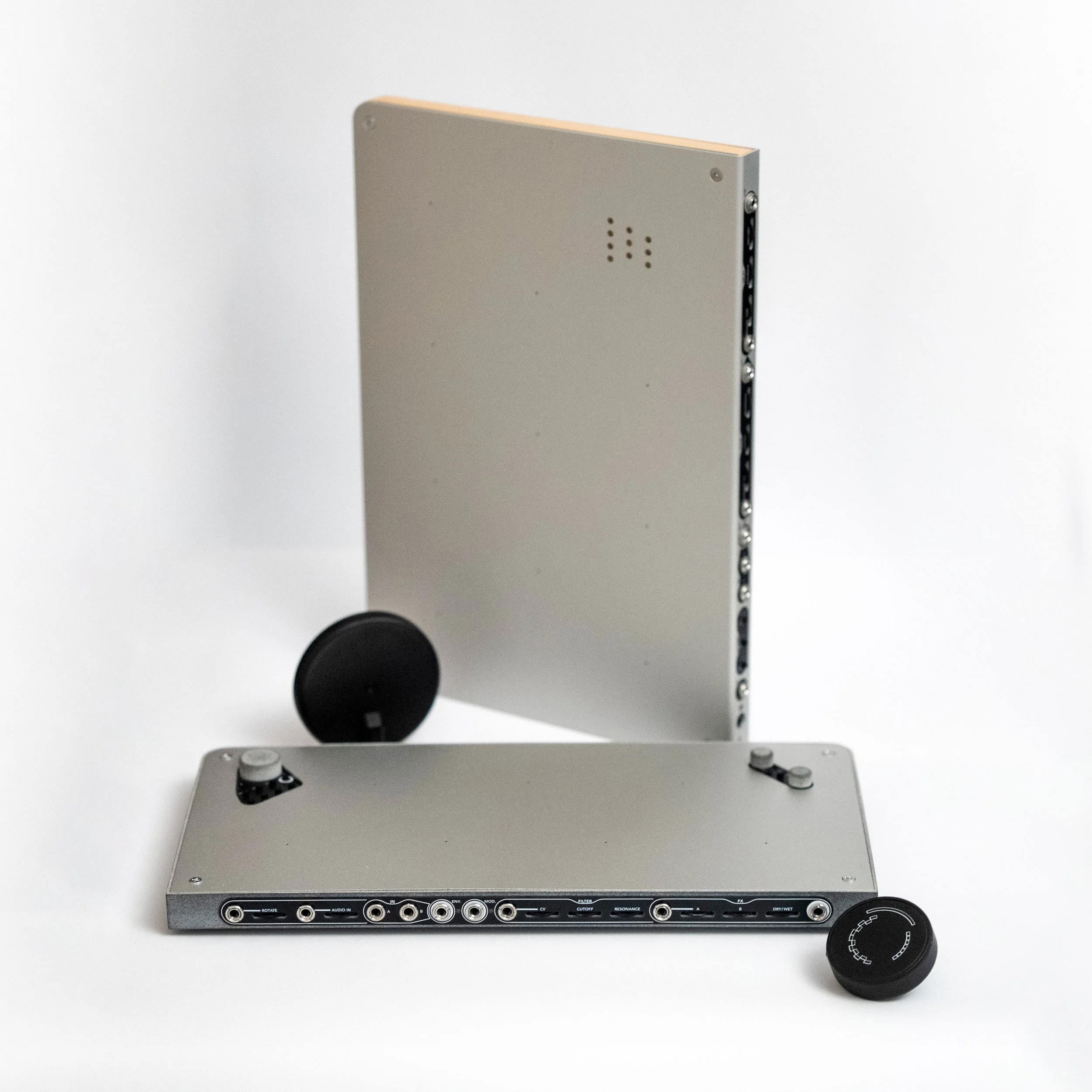
What do they have in common?
In both cases, the sound is physically present on the instrument's surface, and your movements determine how you hear it.
They also both offer CV connectivity for interacting with other electronic instruments, although the Haloplane provides other integration options (see USB Audio).
So, which should I buy?
If you want an instrument that allows you to focus on a limited palette to get new ideas or explore details, choose the Chromaplane. Its minimalistic analog approach is central to its appeal.
If you want to bring your own sounds into the electromagnetic world, experiment with modulation, and create an instrument that changes with your musical ideas, choose the Haloplane.
And if you're drawn to both, well then you’re just like us: we use both the Chromaplane and Haloplane in all our concerts.

Check out this performance with Haloplanes and Chromaplanes used together